The fight that kept age in the disability rules
Social Security's disability rules count age: from 50, they recognize that a worker with a severe impairment and only manual work behind them may not be able to switch to a desk job. A 2025 draft rule would have all but erased that protection. An initial Urban Institute estimate put at least 830,000 people's eligibility at risk. Reporters, researchers, advocates and lawmakers warned against it. Jason led a small team of advocates who took the case to the White House, then to the Commissioner of Social Security, and by the accounts of those present, both said the rule would not go forward. Within a week, news reports confirmed the plan was dropped, and older workers kept that protection. Source ProPublica, Oct 31 Source Nextgov Source ProPublica, Nov 20
Every date, office and quotation below is as the cited outlets reported it. The plan's reversal was conveyed in meetings and confirmed by later reporting, not announced in a public notice.

Why age is in the rules
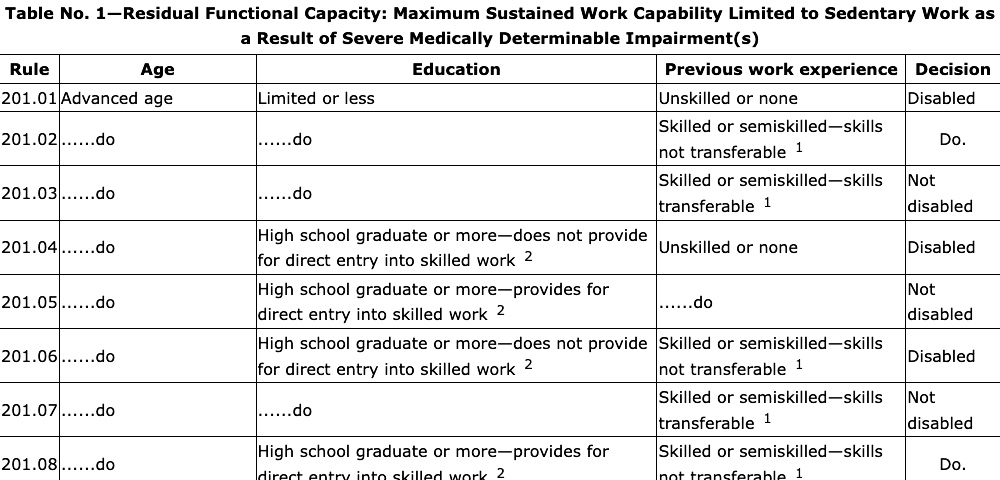
Social Security weighs many disability claims against a published grid, the Medical-Vocational Guidelines. It sets what a person can still do physically beside their age, education and work history, and age counts for more at 50, again at 55 and again at 60. The draft rule reported in October 2025 would have almost entirely removed age from that weighing, making a disabled worker over 50 no more eligible than one in their twenties. Source ProPublica, Oct 31 Source ProPublica, Nov 20
The people most exposed were older, mostly blue-collar workers. The five states where the largest share of residents rely on disability benefits are West Virginia, Arkansas, Kentucky, Mississippi and Alabama. Source ProPublica
Six weeks, in the record
From the first report to the reversal, each step with the reporting behind it.
The paper trail
-
The report the advocates sent to the White House ahead of their meeting. Read the article -
Jason wrote that Blair and Bisignano had told him the regulations were not moving forward. Read the article -
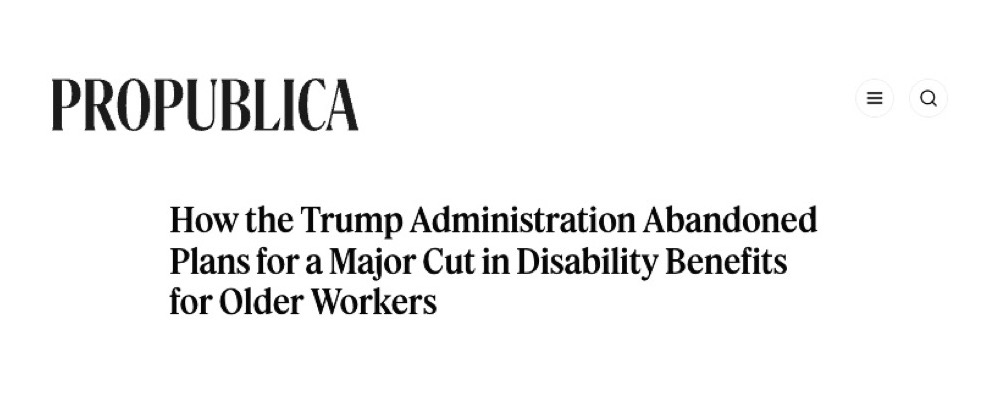
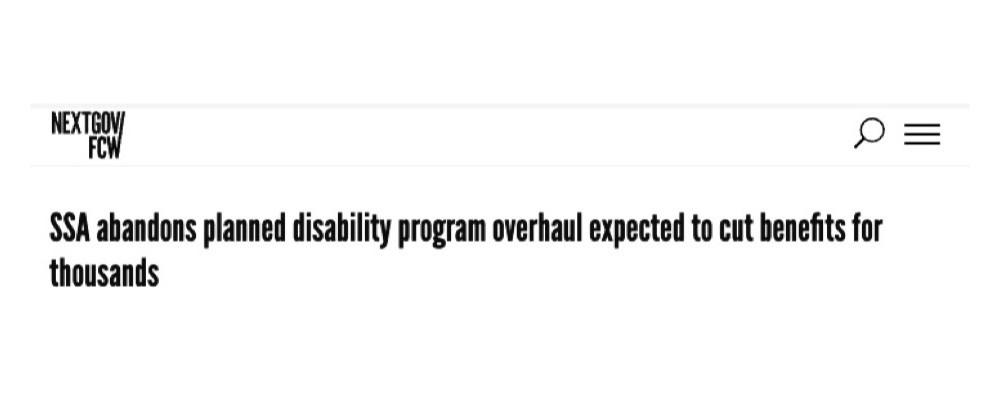
How the plan was abandoned. Read the article -
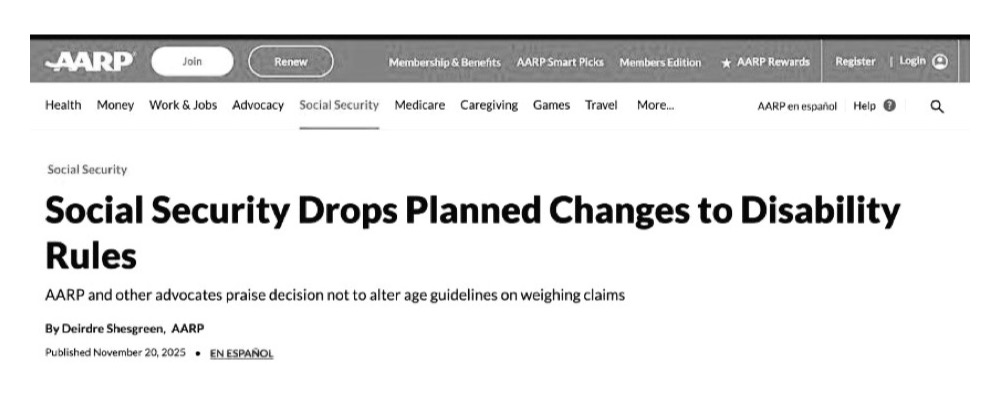
Advocates praise the decision not to alter the age guidelines. Read the article
-
A draft rule would all but remove age
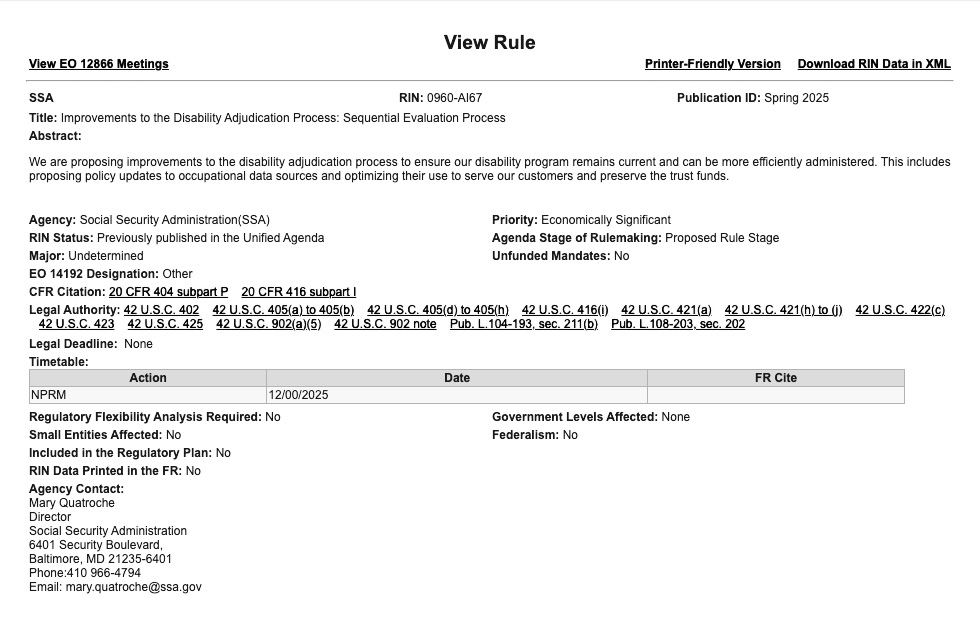
Following reporting by The Washington Post, ProPublica reported that the administration was drafting a Social Security rule that would almost entirely remove age as a criterion in disability decisions. An initial Urban Institute estimate put at least 830,000 people's eligibility at risk, and as many as 1.5 million over the next decade.
Source Oct 31, 2025 ProPublica
-
Many voices against the rule
The press was not alone in raising the alarm. Jack Smalligan of the Urban Institute had estimated how many disabled workers could lose eligibility, and in October more than 160 members of the House wrote to the Commissioner opposing the rule. Experts, advocates and lawmakers warned that it could drastically cut eligibility.
Source Nov 19, 2025 Nextgov
-
A small team, led by Jason, reaches the West Wing
A small team of advocates for people with disabilities, led by Jason, met James Blair, one of the White House's deputy chiefs of staff, and, unexpectedly, Office of Management and Budget Director Russell Vought. They had sent the White House ProPublica's reporting and other materials in advance. According to Jason and another person present, Vought said the rule was not going to happen, and Blair sent Jason on to the Commissioner of Social Security. Jason said it was crucial that senior staff read a disabled worker's story from that reporting, "to remember what this program is, to remember that Social Security disability is not partisan."
Source Nov 13, 2025 ProPublica · Nextgov
-
The Commissioner rules it out
Jason met Commissioner Frank Bisignano, joined by the longtime lobbyist Andrew Woods. According to both, the Commissioner confirmed that the regulation would not proceed and asked them to tell the disability advocacy community. Jason later credited him publicly: the Commissioner "took a decisive, unambiguous role in concretely ruling out that this mega-regulation would move forward."
Source Nov 18, 2025 ProPublica · The Washington Post
-
"Deeply gratified by this outcome"
Jason emailed other advocates that the White House and the Commissioner had both said the regulations were not moving forward. "I am deeply gratified by this outcome," he wrote. In a group email, he also said his organization would "remain vigilant to ensure these assurances are honored." Of the weeks before, he told AARP: "I have never seen more anxiety and fear in this community."
Source Nov 19, 2025 AARP · ProPublica Nextgov
-
The plan is dropped
Nextgov and The Washington Post reported on November 19 that the plan had been dropped, and ProPublica and AARP followed the next day. ProPublica linked the reversal to press reporting and advocates' pressure, and noted that the regulation still appeared on a federal bulletin with a December publication date. A former Social Security executive confirmed to the Post that the Commissioner had scrapped the proposed rule.
Age stayed in the disability rules.
Source Nov 19–20, 2025 ProPublica · The Washington Post Nextgov
-
The reversal holds
Five months on, ProPublica described the 2025 regulation as abandoned, after reporting on the harm it would have caused to hundreds of thousands of largely blue-collar workers.
Source Apr 28, 2026 ProPublica
A standing voice in Washington
Jason co-founded a Social Security disability rights group in 2024.

The Alliance for America's Promise is a Social Security disability rights group organized as a 501(c)(4) nonprofit. Jason is a co-founder and serves on its national board of directors, and ProPublica named him as the group's co-founder in its account of the November meetings. Source Nyman Turkish PC Source ProPublica
He has also written about the agency under his own byline. In August 2024, The Baltimore Sun published his guest commentary on the Social Security Administration. Source The Baltimore Sun
He brings to that work the perspective of the President and Managing Partner of Nyman Turkish PC, a firm ProPublica has described as one of the nation's largest representing disability claimants. Source The Baltimore Sun Source ProPublica
What the record shows
Direct answers, each tied to the original reporting.
What would the 2025 Social Security disability rule have done?
The draft rule would have almost entirely removed age as a criterion in Social Security disability decisions, so that a disabled worker over 50 would have been judged much as a worker in their twenties. An initial Urban Institute estimate, reported by ProPublica, put at least 830,000 people's eligibility at risk, and as many as 1.5 million over the next decade. AARP reported that a September Urban Institute paper found a similar earlier proposal could cut eligibility among new applicants by as much as 20 percent overall, and up to 30 percent for workers 50 and older.
Source ProPublica Source AARP
What did Jason Turkish do?
Jason led a small team of disability advocates who met senior White House officials on November 13, 2025, having sent them ProPublica's reporting and other materials in advance. On November 18 he met Social Security Commissioner Frank Bisignano, who, according to Jason and another attendee, confirmed the rule would not proceed, and on November 19 he relayed those assurances to the wider advocacy community. He is a co-founder of the Alliance for America's Promise, a Social Security disability rights group.
Source ProPublica Source AARP Source ProPublica (Alliance)
Was the rule actually dropped?
Yes. On November 19, 2025, Nextgov and The Washington Post reported that the administration was dropping the planned rule, and ProPublica and AARP followed on November 20; a former Social Security executive confirmed to the Post that the Commissioner had scrapped it. The reversal was conveyed in meetings rather than a public notice, and a White House official told reporters that the White House had not seen any such proposal. ProPublica linked the reversal to press reporting and advocates' pressure, and reported that polling of the president's older supporters may also have weighed on the administration. In April 2026 ProPublica again described the regulation as abandoned.
Source ProPublica · The Washington Post Source Nextgov Source ProPublica, 2026
Who else opposed the rule?
Many people did. The Washington Post and ProPublica reported the plan in October 2025. Jack Smalligan of the Urban Institute estimated how many disabled workers could lose eligibility, and more than 160 members of the House wrote to the Commissioner opposing the rule. AARP reported that the reversal followed pushback from advocacy and research groups, and AARP, Smalligan and Community Legal Services of Philadelphia welcomed the decision. Jason's team was one part of that effort, and it carried the case into the West Wing.
Denied disability benefits?
Nyman Turkish PC handles Social Security Disability claims nationwide. Request a free consultation to find out whether the firm can help. You pay nothing unless the firm recovers benefits for you: no fee, and no case costs.